
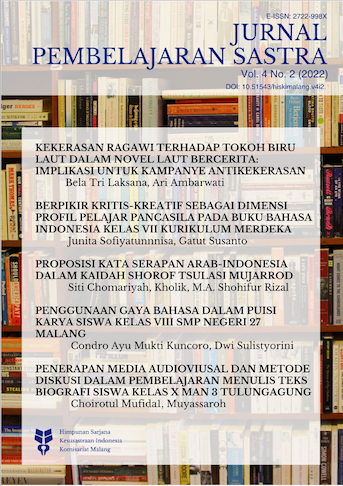
KEKERASAN RAGAWI TERHADAP TOKOH BIRU LAUT DALAM NOVEL LAUT BERCERITA : IMPLIKASI UNTUK KAMPANYE ANTIKEKERASAN
Abstract
The purpose of this study is to describe the physical violence experienced by the character Biru Laut in the novel Laut Bercerita. This study used qualitative descriptive research method. The source of the data was obtained from direct quotes of conversations of Blue characters in the novel Sea of Storytelling. The findings showed that physical violence was divided into two types, namely (1) physiological violence that relies on physical conditions and, (2) anatomical violence such as kicking, pushing, slapping and so on. Bullying is an act of physical violence that must be avoided, not only harming 1 party but several parties also become victims. Bullying can be overcome by providing understanding to students through counseling guidance.The purpose of this study is to describe the physical violence experienced by the character Biru Laut in the novel Laut Bercerita. This study used qualitative descriptive research method. The source of the data was obtained from direct quotes of conversations of Blue characters in the novel Sea of Storytelling. The findings showed that physical violence was divided into two types, namely (1) physiological violence that relies on physical conditions and, (2) anatomical violence such as kicking, pushing, slapping and so on. Bullying is an act of physical violence that must be avoided, not only harming 1 party but several parties also become victims. Bullying can be overcome by providing understanding to students through counseling guidance.
References
Alawiyah, T. (2018). Kekerasan dalam Novel Maluku Kobaran Cintaku Karya Ratna Sarumpaet.
Ambarwati, A. (2017). Mistifikasi Mitos Psikologis Perempuan dalam Cerita Kecil-Kecil Punya Karya (KKPK) Karya Penulis Perempuan Anak. Angewandte Chemie International Edition, 6(11), 951–952., 6(November), 5–24.
Ambarwati, A., Eko Yulianto, W., & Wahyuni, S. (2023). Writing spice-themed poetry for COVID-19 prevention campaign for Indonesian children. Journal of Poetry Therapy, 1–13. https://doi.org/10.1080/08893675.2023.2185825
Andani, N. S., Raharjo, R., & Indarti, T. (2022). Kritik Sosial dan Nilai Moral Individu Tokoh Utama dalam Novel Laut Bercerita Karya Leila S. Chudori. Enggang: Jurnal Pendidikan, Bahasa, Sastra , Seni, Dan Budaya, 3.
Anugra, A., & Yuliati. (2020). Pengaruh Pelatihan Pendidikan Anti Bullying Terhadap Perubahan Kognitif Pelajar Mengenai Pelaku Bullying Di SMP Negeri 2 Kota Bengkulu. Jurnal Kaganga: Jurnal Ilmiah Sosial Dan Humaniora, 4(1), 1–10. https://doi.org/10.33369/jkaganga.4.1.1-10
Apriani, A., Bangun, K. B., & Panggabean, S. (2022). Analisis Semiotika pada Novel: “Tapak Jejak” Karya Fiersa Besari. JIIP - Jurnal Ilmiah Ilmu Pendidikan, 5(9), 3611–3616. https://doi.org/10.54371/jiip.v5i9.851
Dafiq, N. D., Claudia Fariday Dewi, Nai Sema, & Sahrul Salam. (2020). Upaya Edukasi Pencegahan Bullying Pada Siswa Sekolah Menengah Atas Di Kabupaten Manggarai NTT. Randang Tana - Jurnal Pengabdian Masyarakat, 3(3), 120–129. https://doi.org/10.36928/jrt.v3i3.610
Farizi. A, & A, Oktasari. (2017). Kekerasan dalam Novel Laut Bercerita Karya Leila S . Chudori (Violence in The Novel of Laut Bercerita). 1, 139–146.
Firdausy, J. A. (2020). Resepsi Pembaca Novel Laut Bercerita Karya Leila S Chudori: Kajian Eksperimental. Jurnal Sapala, Januari, 226765.
Hariyanto, K. W. (2020). Reception Analysis Pembaca tentang Orde Baru dalam Novel Laut Bercerita Karya Leila S Chudori. Universitas Pembangunan Nasional “Veteran” Jawa Timur.
Hatta, M. (2018). Tindakan Perundungan (Bullying) Dalam Dunia Pendidikan Ditinjau Berdasarkan Hukum Pidana Islam. MIQOT: Jurnal Ilmu-Ilmu Keislaman, 41(2), 280–301. https://doi.org/10.30821/miqot.v41i2.488
Irawati. (2019). Kekerasan Fisik terhadap Anak Usia Dini Ditinjau dari Usia Ibu Menikah di Kelurahan Jatirejo, Kecamatan Gunungpati, Kota Semarang. 27–34.
Istiana, B. (2019). Problematika Sosial dalam Novel Laut Bercerita Karya Leila Salikha Chudori (Kajian Sosiologi Sastra).
Kemenkumham, D. (2023). Korban akibat Tindak Kekerasan Fisik dalam Rumah Tangga.
Korebima. (2019). Kekerasan Fisik terhadap Tokoh Laut dalam Novel Laut Bercerita Karya Leila S Chudori (Tinjauan Struktural). Universitas Sanata Dharma Yogyakarta.
Leila S. Chudori. (2017). Laut Bercerita (E. Sulwesi & C. M. Udiani, Eds.; 1st ed.). Kepustakaan Populer Gramedia.
Lestari, D. (2021). Pelanggaran HAM dalam Novel Laut Bercerita Karya Leila S Chudori. Bahtera: Jurnal Pendidikan, Bahasa, Sastra, Dan Budaya, 8.
Marasaoly, S., & Umra, S. I. (2022). Pencegahan Perundungan (Bullying) Terhadap Siswa SD Dan SMP Dalam Implementasi Kota Peduli Ham Di Kota Ternate. Politica: Jurnal Hukum Tata Negara Dan Politik Islam, 9(2), 94–112. https://doi.org/10.32505/politica.v9i2.4873
Muzzayyanah, D. S. U. (2018). Pergerakan Mahasiswa dalam Novel Laut Bercerita Karya Leila S. Chudori (Kajian Subjek Slavoj Žižek). Jurnal Sapala, 5(1), 1–12.
Nasirin, C., & Pithaloka, D. (2022). Analisis Semiotika Konsep Kekerasan dalam Film The Raid 2 : Berandal. Journal of Discourse and Media Research, 1(1), 28–43.
Nurhapidah, A. A., & Sobari, T. (2019). Kajian Sosiologi Sastra Novel “Kembali” Karya Sofia Mafaza. Jurnal Pendidikan Bahasa Dan Sastra Indonesia, 2(4), 529–534.
Persada, K. (2012). Kekerasan Personal Terhadap Anak Jalanan Sebagai Individu Dalam Ruang Publik. In Fmipa Ui.
Putikadyanto, A. P. A., & Laila, Y. (2022). Kekerasan Terhadap Perempuan dalam Berita: Analisis Pemberitaan Tindak Kekerasan Perawat Christina Ramauli Simatupang di Media Nasional Indonesia. Lingua: Jurnal Bahasa Dan Sastra, 18(2), 157–170. https://doi.org/10.15294/lingua.v18i2.37154
Putri, M. K., Darni, & Setiawan. (2021). Kekerasan Simbolik dalam Novel Pulang dan Laut Bercerita Karya Leila S. Chudori. Jurnal Education and Development, 9(4), 262–270.
Rahmi, Y. (2021). Representasi Kekerasan Dalam Novel Laut Bercerita Karya Leila S. Chudori (Representation of Violence in Laut Bercerita Novel By Leila S. Chudori). Jurnal Bahasa, Sastra Dan Pembelajarannya, 11(2), 194. https://doi.org/10.20527/jbsp.v11i2.11730
Rianawati. (2015). Perlindungan Hukum Terhadap Kekerasan pada Anak. Raheema, 2(1), 4–16. https://doi.org/10.24260/raheema.v2i1.164
Safitri, N., Herlina, E., & Saroni. (2022). Hegemoni Gramsci dalam Novel Laut Bercerita Karya Leila S Chudori. Bahtera Indonesia, 556–564. https://doi.org/https://doi.org/10.31943/bi.v7i2.283
Sembada, E. Z., & Andalas, M. I. (2019). Realitas Sosial dalam Novel Laut Bercerita Karya Leila S. Chudori: Analisis Strukturalisme Genetik. Jurnal Sastra Indonesia, 8(2), 129–137. https://doi.org/10.15294/jsi.v8i2.27824
SMP, D. (2021). Mengatasi Perundungan di Sekolah dengan Program “Roots.” Kemdikbud. https://ditsmp.kemdikbud.go.id/mengatasi-perundungan-di-sekolah-dengan-program-roots/
Sobari, T., & Hamidah, I. (2017). Analisis Wacana Paradigma Kritis Teks Berita Penghinaan Pancasila oleh Habib Rizieq Sihab pada Seaword.com dan Liputan6.com. Lingua: Jurnal Bahasa Dan Sastra, 13(2), 166–181.
Sobry, A. (2022). Jumlah Kasus Bullying Anak di Sekolah Masih Tinggi, KPAI Ungkap Data Mirisnya di Hari Anak Nasional.
Suhardi. (2020). Kritik Sosial Cerpen “ Malam Laksmita .” Lingua: Jurnal Bahasa Dan Sastra, XVI(21).
Suharyono, CH. M. (2012). Tinjauan Yuridis Sosiologis terhadap Meningkatnya Kekerasan dengan Menggunakan Senjata Api. Jurnal Hukum Ius Quia Iustum, 19(4), 627–645. https://doi.org/10.20885/iustum.vol19.iss4.art8
Sukirman. (2021). Karya Sastra Media Pendidikan Karakter bagi Peserta Didik. Konsepsi, 10(1), 17–27.
Sururin. (2016). Kekerasan Pada Anak (Perspektif Psikologi). Institutional Repository UIN Syarif Hidayatullah Jakarta, 3.
Talitha, T. (2022). Resensi Novel Laut Bercerita karya Leila S. Chudori. Gramedia Blog. https://doi.org/gramedia.com
Visty, S. A. (2021). Dampak Bullying terhadap Perilaku Remaja Masa Kini. Jurnal Intervensi Sosial Dan Pembangunan (JISP), 2(1), 50–58. https://doi.org/10.30596/jisp.v2i1.3976
Wahyuni, & Indri, L. (2018). Bentuk Kekerasan dan Dampak Kekerasan Perempuan yang Tergambar dalam Novel Room Karya Emma Donoghue. BASA TAKA, 1.
Wuryani, W. (STKIP S. B. (2017). Pesona Karya Sastra dalam Pembelajaran Bahasa dan Budaya Indonesia. Semantik, 2(2), 87–101.
Yamin, A., Shalahudin, I., Rosidin, U., & Somantri, I. (2018). Pencegahan Perilaku Bullying pada Siswa-siswi SMPN 2 Tarogong Kidul Kabupaten Garut. Jurnal Pengabdian Kepada Masyarakat, 2(4), 293–295.
Yuyarti. (2018). Mengatasi Bullying Melalui Pendidikan Karakter. Mengatasi Bullying Melalui Pendidikan Karakter, 9(1), 52–57.
Zakiyah, E. Z., Humaedi, S., & Santoso, M. B. (2017). Faktor yang Mempengaruhi Remaja dalam Melakukan Bullying. Prosiding Penelitian Dan Pengabdian Kepada Masyarakat, 4(2), 324–330. https://doi.org/10.24198/jppm.v4i2.14352
Zisykien, F. A. (2016). Memori Kolektif Para Tokoh dalam Novel Laut Bercerita. 1–11.
Copyright (c) 2022 Jurnal Pembelajaran Sastra

This work is licensed under a Creative Commons Attribution-NonCommercial-NoDerivatives 4.0 International License.
The Authors submitting a manuscript do so on the understanding that if accepted for publication, copyright of the article shall be assigned to Jurnal Pembelajaran Sastra (Journal of Literary Education) as publisher of the journal, and the author also holds the copyright without restriction.
Copyright encompasses exclusive rights to reproduce and deliver the article in all form and media, including reprints, photographs, microfilms and any other similar reproductions, as well as translations. The reproduction of any part of this journal, its storage in databases and its transmission by any form or media, such as electronic, electrostatic and mechanical copies, photocopies, recordings, magnetic media, etc. , are allowed with a written permission from Jurnal Pembelajaran Sastra (Journal of Literary Education).
Jurnal Pembelajaran Sastra (Journal of Literary Education), the Editors and the Advisory International Editorial Board make every effort to ensure that no wrong or misleading data, opinions or statements be published in the journal. In any way, the contents of the articles and advertisements published in the Jurnal Pembelajaran Sastra (Journal of Literary Education) are sole and exclusive responsibility of their respective authors and advertisers.